
The automotive industry is undergoing a major transformation. With growing concerns about fuel prices, environmental pollution, and sustainable transportation, electric vehicles (EVs) are becoming increasingly popular across the world. At the same time, petrol cars continue to dominate the roads due to their convenience, widespread infrastructure, and familiarity.
As more people consider purchasing a new vehicle, one common question arises: Should I choose an electric vehicle or a petrol car?
The answer depends on several factors, including driving habits, budget, charging availability, maintenance costs, and long-term ownership goals. Both vehicle types have their own advantages and limitations.
In this article, we compare electric vehicles and petrol cars across various aspects to help you make an informed decision.
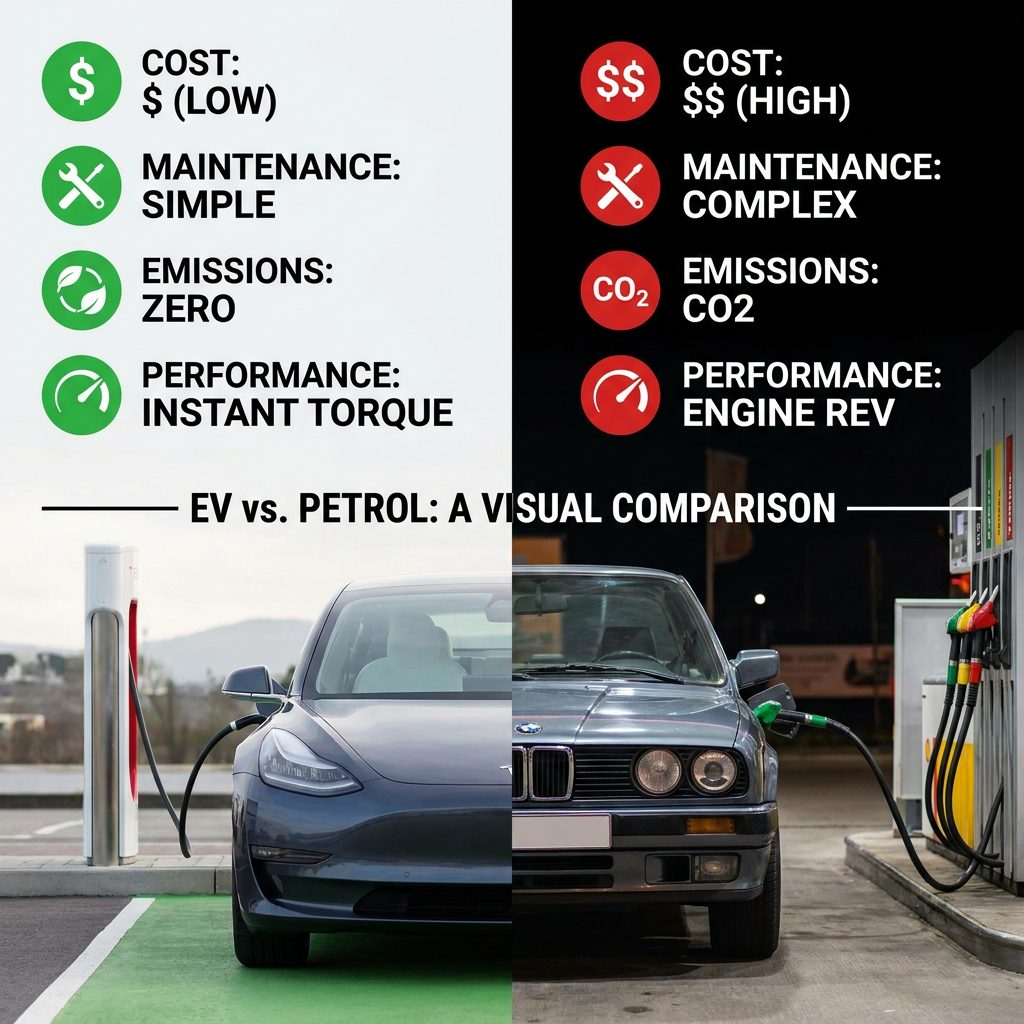
What Is an Electric Vehicle?
An electric vehicle (EV) runs entirely on electricity stored in rechargeable batteries. Instead of using a traditional internal combustion engine, EVs use electric motors to power the vehicle.
Popular benefits of electric vehicles include:
- Zero tailpipe emissions
- Lower running costs
- Quiet driving experience
- Reduced maintenance requirements
As charging infrastructure expands, EV adoption continues to grow in many countries.
What Is a Petrol Car?
A petrol car uses an internal combustion engine that burns petrol to generate power. Petrol vehicles have been the standard mode of transportation for decades and remain widely used due to their convenience and established fuel infrastructure.
Advantages of petrol cars include:
- Quick refueling
- Wide availability of fuel stations
- Lower upfront cost in many cases
- Familiar technology and servicing
Despite their popularity, petrol vehicles contribute to air pollution and depend on fossil fuels.
Purchase Cost Comparison
One of the biggest differences between EVs and petrol cars is the initial purchase price.
Electric Vehicles
EVs often have a higher upfront cost because of their battery technology. However, government incentives and increasing competition are helping reduce prices.
Petrol Cars
Petrol cars are generally more affordable to purchase initially, making them attractive for budget-conscious buyers.
While petrol cars may cost less upfront, long-term ownership expenses can be higher due to fuel and maintenance costs.
Running Cost Comparison
Running costs are one of the strongest advantages of electric vehicles.
Electric Vehicles
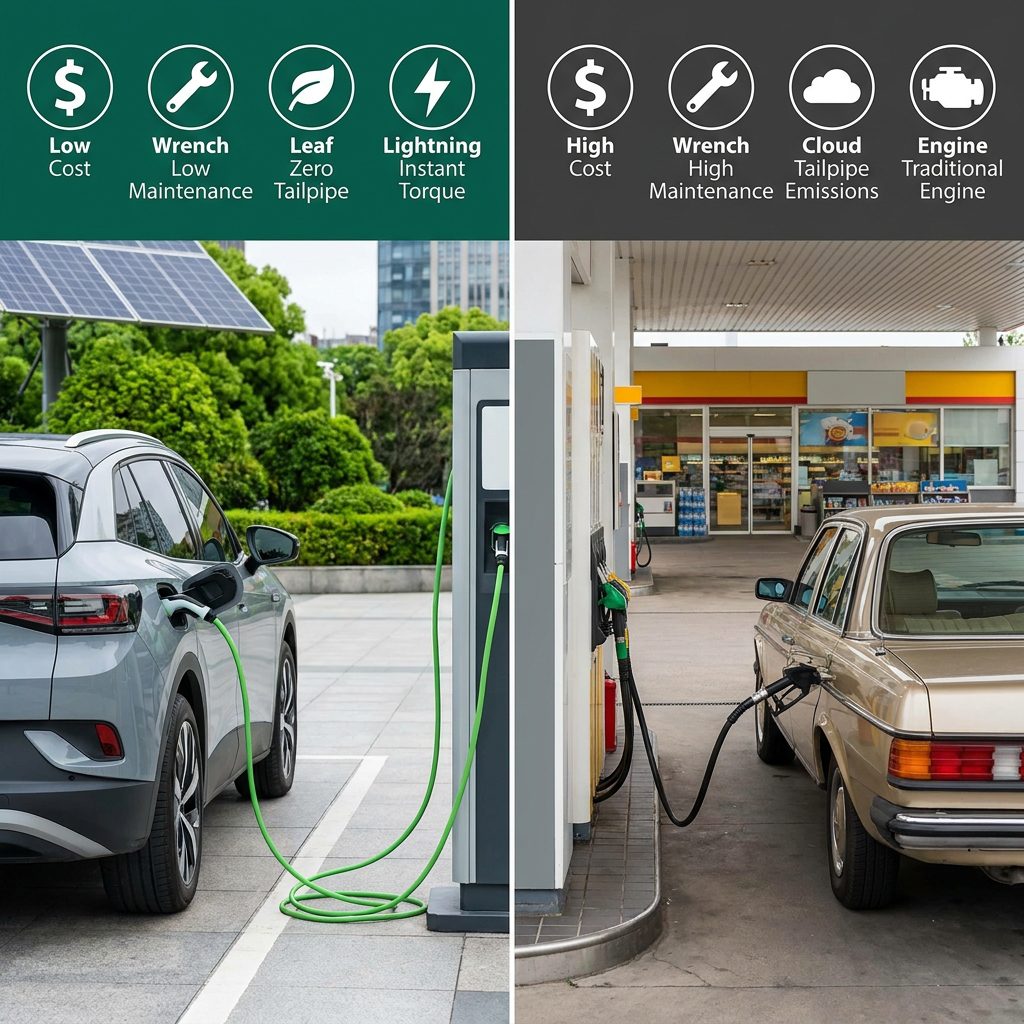
Charging an EV usually costs significantly less than refueling a petrol vehicle. Electricity prices are generally more stable than fuel prices, making operating costs more predictable.
Benefits include:
- Lower energy costs per kilometer
- Reduced dependence on fuel price fluctuations
- Potential savings over long-term ownership
Petrol Cars
Petrol costs can vary frequently due to market conditions and global oil prices.
Drivers who travel long distances regularly may spend considerably more on fuel over time compared to EV owners.
Maintenance Costs
Maintenance is another area where electric vehicles often have an advantage.
Electric Vehicles
EVs have fewer moving parts than petrol cars. They do not require:
- Engine oil changes
- Spark plug replacements
- Exhaust system maintenance
This often results in lower maintenance costs throughout the vehicle’s lifespan.
Petrol Cars
Petrol vehicles require regular servicing, including:
- Oil changes
- Engine maintenance
- Filter replacements
- Exhaust repairs
These maintenance requirements can increase ownership costs over time.
Environmental Impact
Environmental concerns are a major reason many consumers consider electric vehicles.
Electric Vehicles
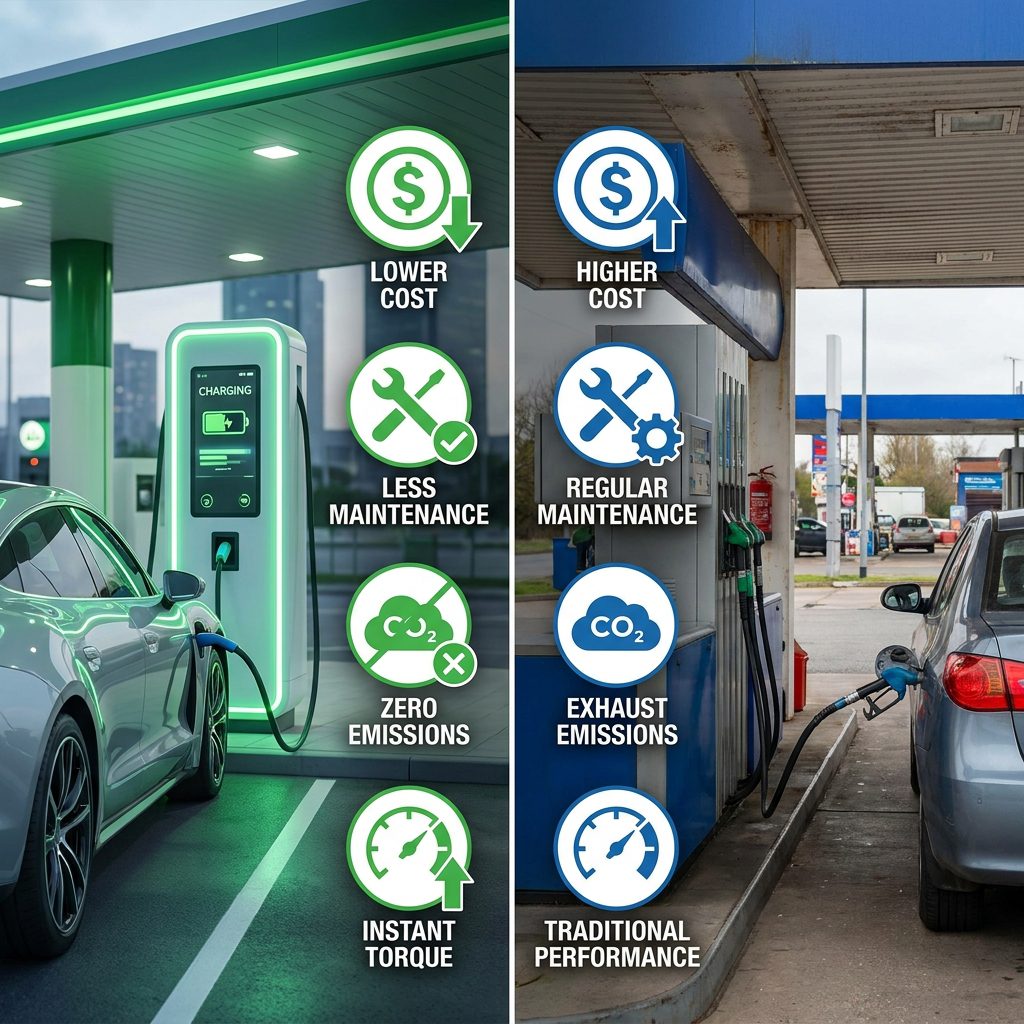
EVs produce zero tailpipe emissions, helping reduce urban air pollution and greenhouse gas emissions.
Benefits include:
- Cleaner air quality
- Reduced carbon footprint
- Support for sustainable transportation
Petrol Cars
Petrol vehicles release carbon dioxide and other pollutants into the atmosphere during operation.
As governments focus on reducing emissions, many countries are encouraging EV adoption through incentives and policy changes.
Driving Experience
The driving experience differs significantly between electric and petrol vehicles.
Electric Vehicles
EVs offer:
- Instant acceleration
- Smooth power delivery
- Quiet operation
- Reduced vibration
Many drivers enjoy the responsive and comfortable driving experience provided by electric motors.
Petrol Cars
Petrol cars provide:
- Familiar driving characteristics
- Engine sound preferred by some enthusiasts
- Established performance options
The driving preference often comes down to personal choice.
Charging vs Refueling
This is one of the most important considerations when choosing between an EV and a petrol car.
Electric Vehicles
Charging options include:
- Home charging
- Workplace charging
- Public charging stations
- Fast charging networks
Charging takes longer than refueling, although modern fast chargers have significantly reduced charging times.
Petrol Cars
Refueling typically takes only a few minutes and fuel stations are widely available.
This makes petrol vehicles convenient for long-distance travel, especially in areas with limited charging infrastructure.
Range Comparison
Range anxiety remains a concern for some EV buyers.
Electric Vehicles
Modern EVs now offer significantly improved range, with many models capable of traveling hundreds of kilometers on a single charge.
However, range may vary depending on:
- Driving conditions
- Weather
- Battery size
- Driving habits
Petrol Cars
Petrol vehicles generally offer longer driving ranges and can be refueled quickly, making them suitable for extended road trips.
Which Vehicle Is Better for Daily Commuting?
For city driving and daily commuting, electric vehicles often provide significant advantages.
Reasons include:
- Lower operating costs
- Easy home charging
- Minimal maintenance
- Quiet driving experience
Drivers with predictable daily travel distances may find EVs particularly practical.
Which Vehicle Is Better for Long-Distance Travel?
Petrol vehicles currently offer some advantages for frequent long-distance travel due to:
- Faster refueling
- Extensive fuel station networks
- Consistent driving range
However, expanding charging infrastructure is making EVs increasingly suitable for long journeys as well.
Future of Transportation
The future of transportation is expected to include a larger share of electric vehicles as battery technology improves and charging networks expand.
Key trends include:
- Faster charging technologies
- Improved battery efficiency
- Greater government support
- Growing consumer awareness
- Increased investment in renewable energy
Many experts believe electric vehicles will play a major role in the future of sustainable transportation.
Final Thoughts
Choosing between an electric vehicle and a petrol car depends on your lifestyle, budget, and driving needs. Electric vehicles offer lower running costs, reduced maintenance, and environmental benefits, making them an attractive option for many modern drivers.
On the other hand, petrol cars continue to provide convenience, quick refueling, and extensive infrastructure support, particularly for long-distance travelers.
For daily commuting and long-term cost savings, electric vehicles are becoming an increasingly practical choice. However, for drivers who frequently travel long distances in areas with limited charging facilities, petrol cars may still offer greater flexibility.
As technology continues to evolve, the gap between electric vehicles and petrol cars is expected to narrow further, giving consumers even more options for efficient and sustainable transportation.